Neck Pain: When to Wait and When to Act
By Dr. Brad Gorski, DC, FSBT | Elite Family Chiropractic
You wake up with a stiff neck. Checking your blind spot hurts, your shoulders tighten at your desk, and finding a comfortable sleeping position becomes a project. You give it a few days, hoping it will settle down.
Sometimes it does. But when neck pain keeps returning, follows a car wreck, or starts traveling into your arm, there is more to consider than how to loosen a tight muscle.
At Elite Family Chiropractic, I start by understanding what changed, how your symptoms behave, and what your examination shows. That helps us determine whether a little time and sensible home care are reasonable, whether you need treatment, or whether another medical evaluation should come first.
What neck pain can actually mean
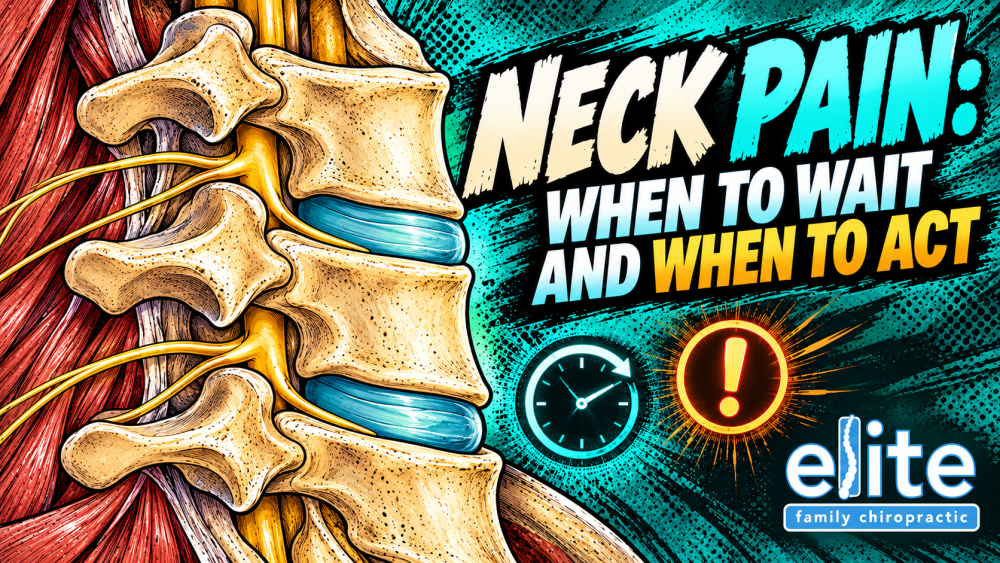
Your neck relies on discs, joints, ligaments, muscles, and nerves to support your head and allow movement. Several of these structures can contribute to pain at the same time.
A muscle strain may cause soreness and restricted movement. Irritated facet joints, the small joints along the back of the spine, may hurt when you turn or look up. A disc or nerve problem can produce symptoms around the shoulder blade or down the arm. Ligament injuries can affect the tissues that help support and guide spinal movement. [1, 2]
A tight muscle can be part of the problem without explaining the whole problem. Muscles may tighten around an irritated or injured area. If the same spot repeatedly flares up, we need to look at what may be contributing to that pattern.
Common causes of neck pain
Prolonged computer work, an awkward sleeping position, repeated overhead activity, or a sudden increase in physical demands can contribute to neck pain. Spending hours in one position may aggravate symptoms, but posture alone does not tell us which tissue is hurting.
Trauma changes the evaluation. Whiplash after a car wreck can involve muscles, ligaments, joints, and discs. A muscle or tendon injury is a strain; a ligament injury is a sprain. Those distinctions help us think through the examination and recovery plan. [1]
Arthritis, disc thinning, and narrowing around the nerves may also contribute. However, an imaging finding does not automatically explain your symptoms. Many people have age-related changes without pain. We need to determine whether the findings fit your history and examination. [2]
Pain traveling into the arm, numbness in the fingers, or reduced strength may suggest nerve irritation or compression. Those symptoms deserve a closer look. [2]
When a short period of home care is reasonable
Brief home care may be reasonable when the pain is mild, began without a significant injury, and is clearly improving. You should still be able to manage most daily activities, without arm weakness, spreading numbness, or the warning signs below.
Watch the trend. Is turning your head getting easier? Are you sleeping more comfortably? Can you do more without provoking the pain?
Many uncomplicated episodes improve over a few weeks. If you are not seeing clear improvement within a week or two, or symptoms are interfering with ordinary activities, schedule an evaluation. You can seek help sooner if you are concerned. [3]
When neck pain is more than stiffness
Recurring pain deserves attention, particularly when it keeps interrupting sleep, driving, work, or exercise. Repeated flare-ups do not automatically mean serious damage, but they are a reason to reassess what is contributing.
Arm pain, tingling, numbness, or changes in grip strength can indicate nerve involvement. New hand clumsiness, dropping objects, or difficulty walking may signal a more urgent neurological problem. [2, 4]
Neck pain after a car wreck, fall, or sports collision also warrants timely assessment. Emergency care addresses immediate dangers, including fractures when suspected. Persistent symptoms may need follow-up to assess injuries that were not fully characterized during that visit.
If you are recovering from whiplash, bring your records and imaging reports. Headaches or dizziness after an injury should also be assessed rather than automatically attributed to muscle tension.
Red flags that need urgent medical attention
Seek emergency care for neck pain with major trauma, rapidly worsening weakness, new trouble walking, loss of bladder or bowel control, or sudden loss of coordination. Call 911 for facial drooping, trouble speaking, sudden one-sided weakness, or other possible stroke symptoms. Fever with severe neck stiffness or a severe headache also needs immediate medical assessment. [4, 5]
New arm or hand weakness, sudden severe neck pain, unexplained weight loss, or persistent pain at rest or at night calls for prompt medical evaluation. These symptoms do not prove a dangerous condition, but they should not wait for a routine treatment visit.
Why the diagnosis should guide treatment
If stretching, massage, or treatment helps briefly and the same pain returns, that gives us a reason to reassess. Temporary relief alone does not confirm which structure is responsible.
I want to know when the pain started, whether there was an injury, what aggravates it, and how it affects your day. The examination may include neck movement, orthopedic testing, and checks of strength, sensation, and reflexes. We also review relevant prior care and imaging. [2]
Imaging should answer a clinical question. Not everyone needs an X-ray or MRI. Persistent nerve symptoms or concerning examination findings may justify additional testing, and progressive weakness can require urgent imaging and referral.
My fellowship training in spinal biomechanics and trauma helps guide how I bring those findings together. We then explain what the findings suggest, what remains uncertain, and why a particular next step makes sense.
How conservative care can help neck pain
Many neck conditions can be managed without surgery. Depending on the findings, care may include appropriate chiropractic treatment, targeted exercise, muscle treatment, and changes to activities that repeatedly aggravate symptoms. [2, 8]
The plan should account for your injury history, neurological findings, and what you can comfortably tolerate. We track progress through practical improvements, such as turning your head while driving, sleeping more comfortably, and returning to exercise.
Shockwave therapy may have a role when persistent muscular pain is contributing. For selected patients with myofascial pain or sensitive trigger points around the upper trapezius and shoulder region, shockwave therapy may help reduce pain as part of a broader rehabilitation plan. Small clinical trials have reported short-term improvements, though results vary and longer-term benefits remain less certain. [6, 7]
That is a different treatment target from a compressed nerve or suspected ligament injury. We determine whether shockwave fits your examination findings and choose the treatment area carefully. Improvement after a treatment helps us monitor your response; it does not, by itself, establish a diagnosis.
If you are not progressing, we reassess. That may mean changing treatment, obtaining additional testing, or coordinating care with physical therapy, pain management, your primary care provider, or a spine surgeon. Helping you reach the right provider is part of managing your care.
What you can do at home without making it worse
For mild symptoms without warning signs, keep moving within a comfortable range. Short walks, frequent position changes, and gentle neck movement are often more useful than prolonged inactivity. [3]
Heat or a cold pack may provide temporary relief. Use a cloth barrier to protect your skin, and choose whichever feels more comfortable. Adjust your workstation so you can look ahead comfortably and avoid spending hours in the same position. [3]
Avoid forcing a painful stretch or repeatedly cracking your neck. If a movement increases arm pain, numbness, or dizziness, stop and have those symptoms evaluated. Do not drive if you cannot turn your head enough to check traffic safely. [3]
When to schedule a neck pain evaluation
Schedule an evaluation if your neck pain is not clearly improving, keeps returning, or is affecting sleep, driving, work, or exercise. Seek assessment sooner after an injury or when pain travels into an arm. Follow the urgent guidance above for weakness or other warning signs.
At Elite Family Chiropractic in West Ashley, our commitment is to helping you understand what you need and choose care that fits your condition. If another provider is better suited to help, we will help coordinate that next step.
Learn more about our approach to neck pain treatment in Charleston, or call 843-225-3263 to schedule an evaluation.
References
1. American Academy of Orthopaedic Surgeons — Neck Pain
2. American Academy of Orthopaedic Surgeons — Cervical Radiculopathy
3. NHS — Neck Pain
4. NHS — Cervical Spondylosis
5. NHS — Meningitis
6. Rahbar et al. — Effectiveness of extracorporeal shock wave therapy versus standard care in the treatment of neck and upper back myofascial pain. Clinical Rehabilitation, 2021. Randomized clinical trial.
7. The effect of focused extracorporeal shock wave therapy on myofascial pain syndrome of trapezius. Medicine, 2020. Systematic review and meta-analysis.
8. Bussières et al. — The Treatment of Neck Pain-Associated Disorders and Whiplash-Associated Disorders. Journal of Manipulative and Physiological Therapeutics, 2016. Clinical practice guideline.
Author
 Brad Gorski DC, FSBT
At Elite Family Chiropractic in Charleston, South Carolina, Dr. Brad Gorski is a top-ranked chiropractor offering effective treatment options for back pain, knee pain, neck and shoulder pain, sciatica, migraines, pinched nerves, herniated discs, and more. Dr. Gorski received his Doctor of Chiropractic degree from Palmer College of Chiropractic in Davenport, Iowa in 2008. He has completed extensive post-graduate training, becoming qualified in Hospital Based Spine Care, MRI Interpretation Review, and Trauma while also completing a Fellowship in Spinal Biomechanics and Trauma. He provides chiropractic care and helps his patients achieve their goal of optimum health and wellness.