How to Recover From a Lumbar Disc Flare-Up
A lumbar disc flare-up can make everyday movement painful. Learn what may help, what can aggravate symptoms, when imaging is useful, and how an individualized plan supports recovery.
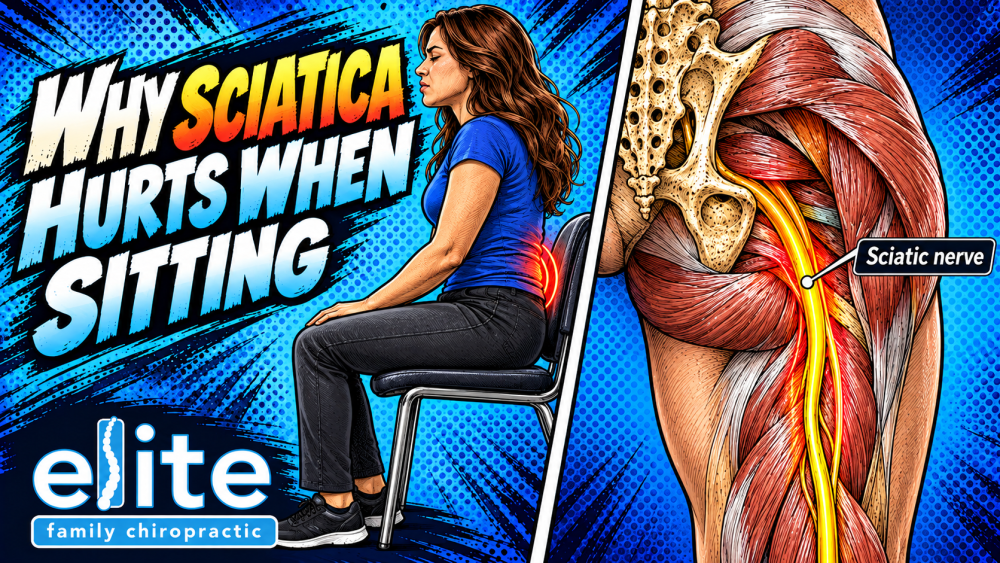
You sit down to answer emails or drive across Charleston, and the pain starts moving through your buttock and down your leg. Standing up helps, but sitting down brings it right back.
Why does something as simple as sitting hurt so much?
Sitting can change the pressure inside your lower-back discs and place pressure on sensitive tissues around the sciatic nerve in your buttock. Which of those matters most depends on where the irritation starts.
When I evaluate someone with this pattern, my first goal is to determine whether the pain is coming from the lower back, the buttock region, or a combination of both. That answer guides the treatment.
Sciatica describes nerve pain that travels into the buttock and leg. It may feel sharp, burning, or electric, and it can occur with tingling, numbness, or weakness.
The sciatic nerve forms from nerve roots that leave the lower spine. It travels deep through the buttock and down the back of the thigh, then branches into nerves serving the lower leg and foot. Often, the irritation starts at a nerve root near the spine—even when you feel most of the pain farther down the leg.
The word “sciatica” describes the symptoms. We still need to determine what is causing them.
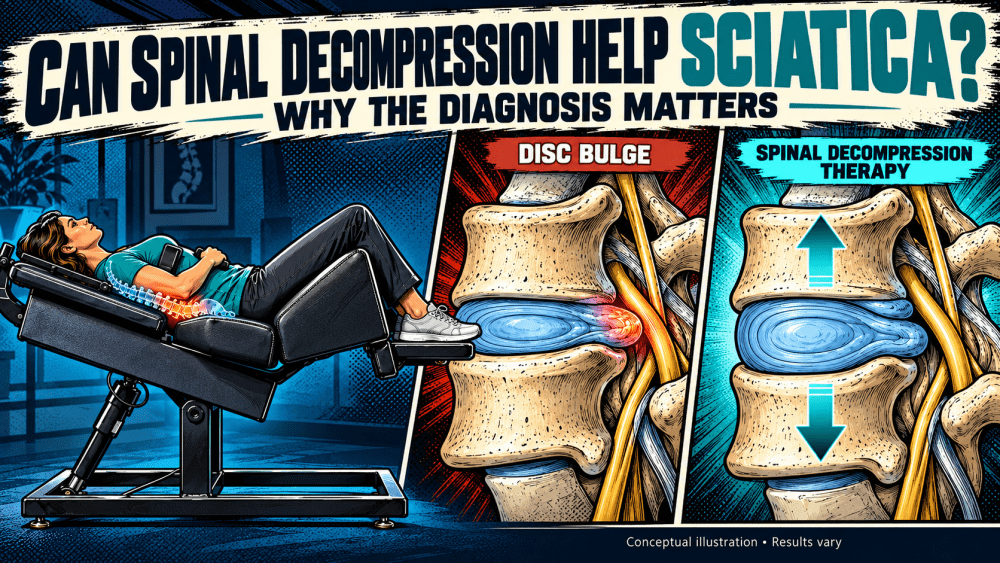
Think of a spinal disc as a cushion with a soft center surrounded by strong, layered fibers. Those outer layers help contain the center and handle the loads placed on your spine.
Sitting changes how that cushion is loaded. Leaning forward or sitting with your lower back rounded can increase pressure inside the disc compared with more supported positions. The amount varies with your posture, chair support, and the condition of the disc. Sitting does not create the same pressure in every person or every position.
For someone with a painful disc bulge or herniation, that change in loading may aggravate symptoms.
The outer portion of the disc contains small sensory nerve endings. These nerves can send pain signals when the tissue becomes irritated. They are different from the larger nerve roots that contribute to the sciatic nerve.
An annular fissure, often called a disc tear, is a separation in the fibers of the disc’s outer ring. If that area is painful, pressure and strain on it may provoke symptoms. A herniated disc can also place stress on the outer ring and contribute to back pain.
A simple way to picture this is pressing on a tender bruise. The pressure is not necessarily extreme, but the tissue is already sensitive.
Pain from the disc itself and sciatic nerve pain are different, although they can happen together. That distinction helps explain why one person mainly feels an ache in the low back while another feels burning or shooting pain down the leg.
A disc problem can affect a nearby nerve root in two ways: physical pressure and inflammation.
Disc material can trigger inflammation around a nerve root, making it more sensitive. This means the explanation can be more involved than a simple “pinched nerve.” Pressure and inflammation may both contribute to leg pain, tingling, or numbness.
This is why I look at how your symptoms behave along with your examination findings. Where the pain travels and which positions change it help us understand what needs attention.
The sciatic nerve travels deep beneath the gluteal muscles and usually passes underneath a smaller muscle called the piriformis.
In some people, muscles or other tissues in this region can irritate the nerve. Sitting places pressure on the buttock and can aggravate that irritation. Symptoms may include a deep buttock ache, burning, or pain traveling down the back of the leg.
Piriformis syndrome is one possible cause, but buttock pain alone does not establish that diagnosis.
This is where the examination matters. Pain felt in your buttock may start in your lower back, come from tissues around the nerve in the buttock, or involve both areas. Automatically treating every case as a tight piriformis can miss part of the problem.
Driving combines prolonged sitting with limited opportunities to move. The seat position and vibration from the vehicle can also add to the load on your spine.
For someone with sensitive tissues, a drive across town may be enough to bring symptoms on.
The timing gives us useful clues. Does pain begin as soon as you sit, or after 20 minutes? Does adjusting the seat help? Does the pain settle when you get out and walk?
Those details help guide the evaluation, but driving pain alone cannot tell us which tissue is responsible.
No. Sitting pain is a clue, not a diagnosis.
Even conditions that affect spinal nerves can respond differently. For example, people with lumbar spinal stenosis often feel worse while standing or walking and better while sitting or leaning forward.
That is why advice that helps one person may aggravate another. Your symptoms, examination, and imaging—when needed—should fit together before we settle on a treatment plan.
Break up long periods of sitting with brief walks or other comfortable movement. You might start with a break about every 20–30 minutes and adjust based on your symptoms. If discomfort starts sooner, change positions sooner.
Try a supportive chair with your feet resting comfortably on the floor. A small rolled towel behind your lower back may help. Use your response as a guide; a support that increases leg pain needs adjusting or removing.
For longer drives, plan safe stops so you can get out and move.
A stretch should not create shooting pain, increasing tingling, or numbness. If it does, stop and have the movement reviewed. The right exercises depend on what is irritated and how your symptoms respond.
Care may include appropriate chiropractic techniques, soft-tissue treatment, and exercises that gradually improve strength and movement. Hands-on treatment should support an active recovery plan that includes exercise.
At Elite Family Chiropractic, I also consider whether you need imaging or another provider involved. When appropriate, that may mean working with physical therapy, pain management, orthopedics, or neurosurgery.
If sitting keeps bringing on buttock or leg pain, the next step is to find out why.
During an evaluation, I look at your movement, strength, sensation, and reflexes, along with the history of your symptoms. I also want to understand what you are struggling to do—whether that is driving to work, sitting through dinner, or getting back to exercise.
At Elite Family Chiropractic in West Ashley, our approach to sciatica care in Charleston starts with that full picture. The goal is a plan that fits your condition and helps you return to daily life with greater comfort and confidence.
Go to the emergency department immediately for new difficulty urinating, loss of bladder or bowel control, numbness around the groin or saddle area, or rapidly worsening leg weakness. New foot weakness or foot dragging needs prompt, same-day medical assessment.