Shockwave Therapy
-

- Tweet
- Share


Brad Gorski, D.C.
Chiropractor located in Charleston, SC
Heel pain that makes your first steps difficult. An elbow that aches when you grip a golf club. Shoulder pain that interrupts sleep or makes reaching overhead uncomfortable. When pain keeps interfering with everyday life, you want to know what is causing it and what may help.
At Elite Family Chiropractic in West Ashley, Dr. Brad Gorski, DC, FSBT, offers PiezoWave shockwave therapy as part of individualized care for selected tendon and muscle conditions. Treatment begins with an examination to identify the problem, determine whether shockwave is appropriate and build a plan focused on less pain and better function.
Call 843-892-5671 to schedule an evaluation and find out whether shockwave therapy is right for you.
Shockwave Therapy Charleston, SC
Targeted treatment to help you move more comfortably and get back to the activities you enjoy.
What is shockwave therapy
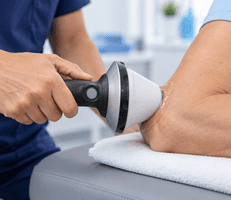
Shockwave therapy, also called extracorporeal shockwave therapy or ESWT, uses acoustic pressure waves delivered through a handheld applicator placed against the skin. These mechanical waves stimulate the treatment area and may help reduce pain and support tissue-repair responses in selected conditions. No incision or injection is involved. [1]
The word “shockwave” does not mean an electrical shock. This treatment differs from electrical stimulation and TENS.
PiezoWave therapy at our West Ashley office
PiezoWave is the technology we use to deliver treatment. Its piezoelectric system generates acoustic energy that can be focused at a selected tissue depth using the appropriate applicator and coupling pad. Treatment settings are selected for the area being treated and adjusted to your tolerance. [2]
This allows Dr. Gorski to address a defined treatment area while keeping your diagnosis and comfort central to the plan.
What conditions may benefit from shockwave therapy
Shockwave is most commonly considered for persistent tendon and plantar fascia problems. Depending on your examination and diagnosis, it may be an option for:
-
Plantar fasciitis and persistent heel pain, including pain with standing or walking.
-
Achilles tendinopathy, affecting the tendon at the back of the ankle.
-
Tennis elbow and selected cases of golfer’s elbow.
-
Calcific shoulder tendinopathy and selected rotator cuff tendon problems.
-
Patellar tendinopathy, involving the tendon below the kneecap.
-
Greater trochanteric pain syndrome, which can involve the tendons along the outside of the hip.
It may also be considered for selected myofascial pain and trigger-point conditions. Evidence and expected results vary by diagnosis. [3]
If you are dealing with foot pain, shoulder pain, or a sports injury, the first step is determining which tissue or structure is responsible.
Why your examination comes first
Pain in the same area can have different causes. A painful heel may need a different approach from a painful tendon, irritated nerve, or joint injury. Tenderness alone does not establish a diagnosis.
Dr. Gorski reviews how your symptoms began, what makes them better or worse, and what you have already tried. Your examination may assess movement, strength, tendon loading, joint function, and nerve findings. Imaging or referral may be recommended when the findings warrant further investigation.
Shockwave may be considered when an appropriate exercise program, activity changes, or other conservative care have not provided enough improvement. [1]
We are committed to helping determine what you need. If shockwave is a good fit, we will explain why. If another approach makes more sense, we will help you take that next step.
What to expect during treatment
Once we determine that treatment is appropriate, gel is applied to the skin and the applicator is positioned over the selected area. You may feel rhythmic pulses, tapping, or localized discomfort. Your feedback helps guide the treatment intensity. [4]
The treatment portion is generally brief, although appointment length depends on the area being treated and the rest of your care plan. Your recommended number and spacing of visits will depend on your condition and response.
Progress is assessed through changes that matter to you, such as walking more comfortably, gripping with less pain, sleeping better, or returning to exercise. If you are not making meaningful progress, the diagnosis and plan should be reassessed.
How shockwave fits into your recovery plan
Shockwave may be combined with progressive strengthening, mobility exercises, activity modifications, and other care selected for your findings. Reducing discomfort is one goal; helping you tolerate everyday activity and rebuild function is another.
Dr. Gorski’s fellowship training in Spinal Biomechanics and Trauma informs his assessment of injury and movement. When your needs call for additional care, he collaborates with physical therapists, pain management physicians, orthopedic providers, and other healthcare professionals.
Shockwave therapy questions
Does shockwave therapy hurt
It can be uncomfortable, especially over a sensitive area. Settings can be adjusted to your tolerance. Temporary soreness, redness, swelling, or bruising may occur afterward. Less common risks include injury to the treated tendon or fascia; your individual risks will be reviewed before treatment. [4]
How many treatments will I need
A short course of treatment is often considered, followed by reassessment. The number of visits depends on the diagnosis, how long symptoms have been present, and your progress. We will explain the proposed schedule and what we will use to judge whether it is helping.
How quickly will I notice improvement
Some people notice an early change in discomfort, while others improve gradually over the following weeks. Results vary, and immediate pain relief does not establish that the tissue has fully recovered. Your activity plan will reflect both your symptoms and functional progress.
Can I return to work or exercise afterward
Many people can continue ordinary daily activities, but strenuous exercise or activities that heavily load the treated area may need temporary adjustment. Your instructions will depend on the condition and your response. [5]
Is shockwave appropriate for everyone
Your medical history, medications, recent injections, and the condition of the treatment area need to be reviewed first. Tell us about pregnancy, bleeding disorders or blood-thinning medication, implanted devices, infection, cancer in the treatment area, or a suspected tendon tear. These factors may change whether or how treatment is offered. [3, 4]
Is PiezoWave the same as shockwave therapy
PiezoWave is a specific system used to deliver acoustic wave treatment. “Shockwave therapy” describes the broader treatment category. Device type, settings, and treatment selection all matter. [2]
Is shockwave therapy covered by insurance
Coverage varies by plan and the service provided. Contact our office before beginning treatment so we can discuss fees and any available coverage information.
Schedule a shockwave therapy evaluation in Charleston
If persistent pain is keeping you from walking comfortably, working, exercising, or enjoying time with your family, an evaluation can help clarify your options.
Elite Family Chiropractic is located at 1662 Savannah Highway, Suite 115, Charleston, SC 29407, in West Ashley. We welcome patients from Charleston, Johns Island, James Island, and nearby communities.
Call 843-892-5671 or contact our office to schedule your evaluation.
Clinical references
-
Homerton Healthcare NHS Foundation Trust — Shockwave Therapy.
-
Royal National Orthopaedic Hospital — Patient guide to radial extracorporeal shockwave therapy. General patient-experience and screening information; device-specific instructions take precedence.
-
Bradford District Care NHS Foundation Trust — Shockwave therapy information for podiatry patients. General activity guidance; the patient’s individual plan takes precedence.
Services
-
 Neck Painmore info
-
Foot Painmore info
-
Knee Painmore info
-
Back Painmore info
-
Pinched Nervemore info
-
Car Accidentmore info
-
Class 4 Laser Therapymore info
-
Sports Injuriesmore info
-
Migrainesmore info
-
Pediatric Chiropractormore info
-
Prenatal Chiropractormore info
-
Chiropractic Caremore info
-
Sciaticamore info
-
Herniated Discmore info
-
Neuropathy Treatmentmore info
-
Shoulder Painmore info
-
Spinal Decompression Therapymore info
-
Shockwave Therapymore info
-
Whiplashmore info