Laser Therapy for Nerve Pain: Does It Help?
Can laser therapy help nerve pain? Learn where Class IV laser may fit, what research shows and why a clear diagnosis matters at our Charleston office.
By Dr. Brad Gorski, DC, FSBT | Elite Family Chiropractic
Patients often tell me their lower back hurts when they stand from a chair, get out of the car, or roll over in bed. Some have been told it is “just a muscle.” Others assume it is part of getting older.
Sometimes a muscle strain is the explanation. But when pain keeps returning, understanding what is driving it helps us decide which care makes sense.
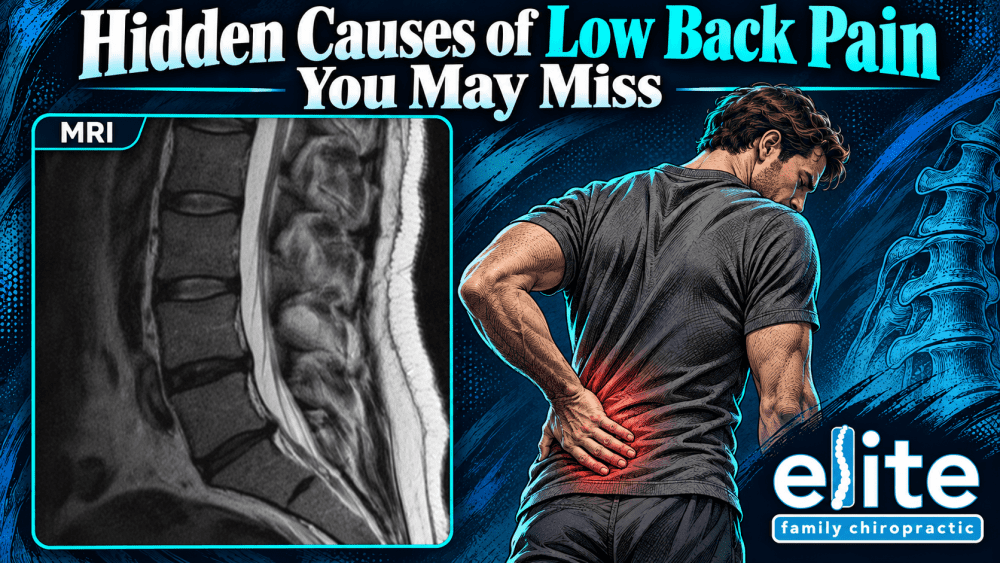
Overlooked causes of low back pain can include disc injuries, irritated joints, hip problems, past injuries, and changes in how your body carries weight. Reduced strength, poor sleep, and stress can also contribute.
The spot that hurts does not always tell the whole story. These patterns offer clues about what deserves a closer look:
| If your pain… | An evaluation may consider… |
|---|---|
| Increases with sitting, bending, coughing, or sneezing | A disc or nearby nerve |
| Occurs near a low-back “dimple” when turning in bed or climbing stairs | The SI joint, along with the hip and lower spine |
| Comes with groin pain or trouble putting on shoes | The hip |
| Increases with standing, leaning backward, or turning | Spinal joints and other structures affected by those movements |
| Travels into the leg with tingling or numbness | Nerve irritation |
These patterns overlap. They guide the examination, but they do not diagnose the problem on their own. Many people have more than one factor involved.
It can. A disc problem does not always start with sudden, severe pain. Sometimes the first sign is stiffness after driving or a deep ache after sitting.
Discs are cushions between the bones of your spine. An irritated or injured disc can contribute to back pain. If a nearby nerve becomes involved, symptoms may spread into the buttock or leg.
I ask whether sitting, bending, coughing, or sneezing changes the pain. I also check for symptoms such as tingling, numbness, or weakness.
Those findings help determine whether a disc or nerve may be involved and whether further testing would be useful. Many people with disc-related pain improve without surgery. You can read more about lower back pain from a herniated disc.
Your sacroiliac, or SI, joints connect the base of your spine to your pelvis. They help transfer weight between your upper body and legs.
A painful SI joint may cause discomfort near one of the “dimples” in your lower back, into the buttock, or sometimes toward the groin or upper leg.
Turning in bed, climbing stairs, standing on one leg, or getting out of a car may hurt. Pregnancy, falls, and other injuries can be relevant.
Because SI joint symptoms overlap with hip and disc problems, I look at your history and several examination findings. Where you point to the pain is useful, but it is only part of the answer.
Yes. Your hips and lower back share the work of walking, bending, and turning. When a hip is stiff or painful, you may change how you move and place more demand on your back.
Think about a golf swing. If your hip does not rotate comfortably, you may try to complete the movement somewhere else.
Hip arthritis, joint irritation, tendon problems, and limited motion may contribute. Clues include groin pain, pain along the outside of the hip, trouble putting on shoes, or discomfort getting into a car.
If treatment focused only on your back provides short-lived relief, checking your hips may help explain what has been missed. I assess hip motion and strength alongside the lower back rather than treating them as separate systems.
Possibly. Your feet, knees, hips, pelvis, and spine work together when you stand and walk. Differences in leg length, hip motion, or foot function may change how weight passes through that system.
For some people, those differences may contribute to pain. Others have similar findings without symptoms. An uneven pelvis or a “short leg” is a starting point for evaluation, not a diagnosis by itself.
A leg that looks shorter is not necessarily anatomically shorter. Your position on the table, hip position, and muscle guarding can affect how your legs appear. That is different from a true difference in bone length.
The distinction matters because the treatment may be different.
My biomechanical examination looks at how you stand, walk, and move. When knowing your actual leg length would affect treatment, we measure it appropriately rather than guessing.
A heel lift or foot support may be useful when the findings support it. In another person, the more relevant issue may be hip motion, strength, or spinal and pelvic function.
I explain this in more detail in Is My Leg Really Short? And Could It Be Causing My Back Pain?.
It can, especially when symptoms began after the injury and never fully settled.
A car wreck can injure discs, joints, muscles, and spinal ligaments without causing a broken bone. These connective tissue injuries may affect comfort and movement during recovery.
That history matters. I want to know what happened, how you felt afterward, what care you received, and whether you returned to your usual activities.
However, pain that appears years later should not automatically be blamed on an old wreck. New causes still need to be considered.
A normal X-ray does not rule out every injury. X-rays help assess bones, but they do not fully evaluate discs, ligaments, or nerves. Whether additional testing would help depends on your symptoms and examination.
Facet joints are small joints at the back of your spine that help guide movement. They may become painful with arthritis, injury, or repeated stress.
Pain may stay near the lower back or spread toward the buttock. Standing, leaning backward, or turning may make it worse.
These symptoms overlap with other conditions, so they cannot confirm the source by themselves. I check spinal motion along with the hips and pelvis to understand which movements are limited or painful and what deserves further attention.
After a painful episode, it is natural to avoid movements that hurt. But weeks of doing less can leave you with less strength and endurance.
Carrying groceries, standing to cook, or working in the yard may become uncomfortable sooner than before.
That does not mean your pain is “just weakness.” It means recovery may need more than temporary relief. A gradual return to walking, strength work, and daily activities can help rebuild your ability and confidence.
Your starting point should match your symptoms and health. Your exercises should also connect to what you want to do again, whether that is playing golf, lifting your children, or getting through a workday more comfortably.
Sometimes, and these conditions need a different approach from routine muscle or joint care.
Young athletes who repeatedly bend backward and rotate may develop a stress injury in a small part of a vertebra. Back pain that keeps returning during sports deserves an evaluation.
In older adults, osteoporosis can make spinal bones more likely to fracture, sometimes after a minor fall or strain. Sudden pain deserves prompt assessment, especially with known bone loss or long-term steroid use.
If the examination raises concern for a fracture or stress injury, the next step is appropriate testing and coordinated care—not treating it as an ordinary sore back.
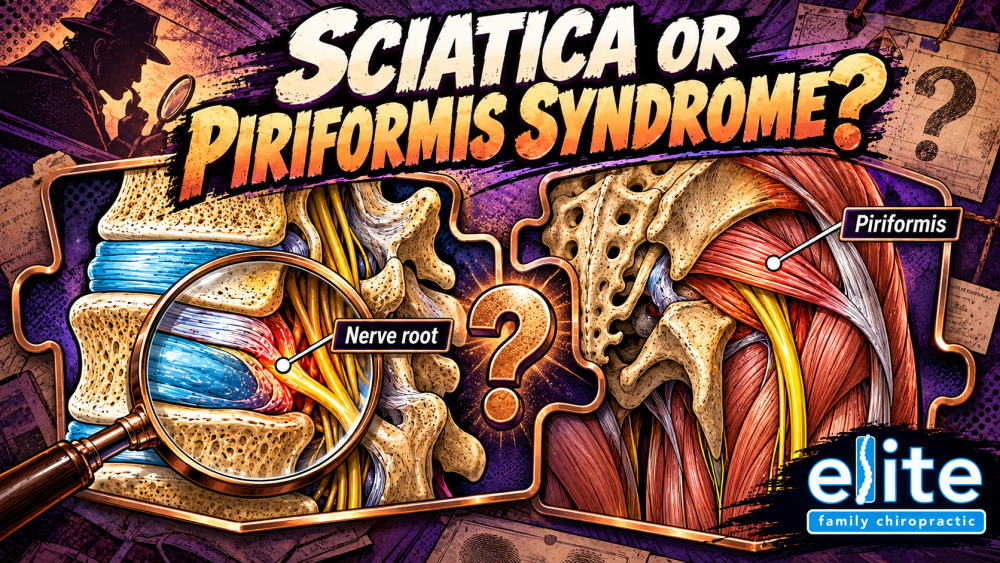
Yes. Pain traveling into the leg is often called sciatica, but it does not automatically mean a herniated disc.
Narrowing around spinal nerves and, less commonly, nerve irritation in the buttock can produce similar symptoms. Joints and muscles can also refer pain into the leg.
My examination checks strength, feeling, reflexes, and how symptoms change with movement. Those findings help distinguish nerve problems from other sources of pain and guide the next step.
Read more about our sciatica evaluation and care.
They can. Poor sleep and stress can make existing back pain feel stronger, and pain can then disrupt sleep.
That does not mean your symptoms are imaginary. Sleep, stress, and the nervous system influence how your body experiences pain.
For ongoing symptoms, a useful plan may include movement, appropriate hands-on care, better sleep habits, and help returning to activities with confidence. My guide to sleeping with low back pain explores that part of the picture.
A thorough evaluation should help narrow down the likely source of pain and identify factors that may be keeping it active. I consider your injury history, nerve function, daily demands, and how your spine, pelvis, and hips work together.
The examination also helps determine whether imaging or another provider’s evaluation would change the plan. Testing should answer a useful clinical question.
When appropriate, an initial course of treatment gives us more information:
Can you sit, stand, or walk longer?
Are everyday movements becoming easier?
Are flare-ups becoming less frequent?
Does the improvement last between visits?
Your response helps refine the working diagnosis and treatment plan. Improvement is useful information, although it does not prove that one particular tissue caused the pain.
If progress does not match what we expected, we reassess.
Not every cause of low back pain can be fully reversed. Arthritis, lasting changes from an injury, and some long-standing disc or joint conditions may require management rather than a one-time fix.
That does not mean you cannot feel better or stay active.
It means choosing useful goals: fewer flare-ups, better movement, more strength, and less disruption to work, sleep, and family life.
Management should have a purpose. The type and frequency of care should reflect your symptoms, your progress, and what you can do independently. The plan should change as your needs change.
A painful spinal joint, irritated nerve, and injured tendon can cause discomfort in the same general area, but they may need different care.
Chiropractic treatment may be part of a plan for selected joint and movement problems. Targeted exercises can improve strength and help you handle the demands of daily activity. Changes to work habits or exercise may give an irritated area a chance to settle while you remain active.
Shockwave therapy may also have a role when a specific tendon condition is part of the picture. For example, persistent tendon pain along the outside of the hip can make walking uncomfortable and affect how you move. Research suggests focused shockwave may help pain in selected patients with this condition, although results vary and the evidence has limitations.
At our office, PiezoWave shockwave therapy may be considered alongside rehabilitation when the diagnosis supports it. In that situation, we are treating an identified hip tendon problem—not assuming shockwave is the answer to every case of back pain.
The goal is to choose care for a clear reason and judge it by meaningful improvement.
My fellowship training in spinal biomechanics and trauma shapes how I approach a sore back. I consider the painful area, the structures around it, and how they work together during your daily activities.
Whether you need a focused course of treatment or a longer-term management plan, you should understand what we think is contributing to your pain, why a treatment is being recommended, and how we will measure progress.
When another provider can help, I coordinate with physical therapy, primary care, pain management, orthopedic spine providers, or neurosurgery. If our office cannot provide the help you need, we will help you get to the right doctor.
We aren’t committed to selling a treatment. We’re committed to helping determine what you need.
If nagging low back pain keeps returning, learn more about our low back pain evaluation and care. To schedule an evaluation at Elite Family Chiropractic in West Ashley, call 843-892-5671 or contact our office.